Survivor

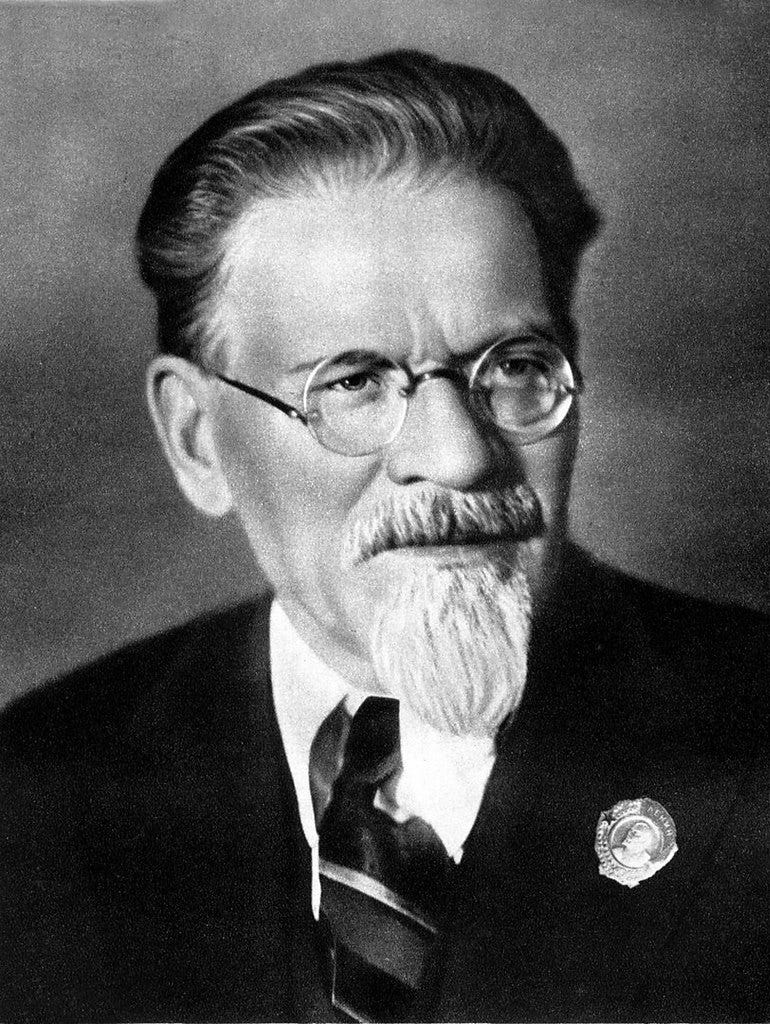
Imagine, you are a Soviet citizen in the 1930s, and you are being mistreated by your superiors. May be your boss hates you, and disciplines you for no reason. May be you are being persecuted by the local authorities. You tried to negotiate with them, or placate them, but to no avail. They are implacable. What are you gonna do?
Is there anything you could do about it, at all?
Strangely it may sound, but yes, there is a last resort option that might actually work. You need to write someone on the very top of Soviet government, on the top of the hierarchy, and beg him to intervene. Because is he actually does intervene, then yes, indeed, it may change the situation in your favour.
That is understandable. But whom you should write exactly? To Joseph Stalin himself? No, better not. A letter to Stalin may change the situation for the better, yes, but it is as likely to change it for the worse. You need to present special reasons to convince Stalin to intervene in your favour, and, as you likely do not have such reasons, you better not write him at all.
You need to write to Mikhail Kalinin. That is the primary figure in the Soviet government accepting complaints and begs for help, and who - surprisingly often - helps those who are begging for it. A sort of kind deity of the Soviet pantheon that is actually answering to people’s prayers and may even answer to yours.
What was Mikhail Kalinin’s position, exactly? Oh, that is very interesting question. To start with, he was the head of state. As the Chairman of the Supreme Soviet, his formal position made him the head of Soviet Union. Legally, and on paper, it was Kalinin who was the supreme boss.
(Stalin, for all his powers, never was the formal head of state)
Second. Through Stalin’s era, Kalinin’s position was absolutely unique, unprecedented. What made Kalinin such a rarity among all the Soviet bosses, is that of them all, he was the only person personally picked by Lenin. Everyone else, no exception, was picked by Stalin, and was Stalin’s appointee. Kalinin was only and only exception from the rule.
Let me explain this a bit. How did succession, and the cadre replacement work, in the Soviet Union. First, there is Lenin. He is the supreme boss. He personally picks the leadership, and picks a bunch of people - including Stalin - and promotes them to the highest positions in government. Then Stalin one by one destroys and kills all of them, replacing Lenin’s picks with his own, Stalin’s shills and vassals.
So, Stalin had been Lenin’s vassal himself, and that is how he got into government into the first place. But, having concentrated the supreme power, he won’t tolerate a single Lenin’s vassal around him anymore. No. Everyone, everyone with as much as a bit of power must be a personal Stalin’s pick, personal Stalin’s vassal, who will owe his position to Stalin, and to him only.
It is the vassals of the new boss, that will occupy all the positions of power in the country. The vassals of the old boss, on the other hand, will be purged and then killed, one by one. The fact that the new boss used to be the vassal of the old boss, as well, does not contradict this picture at all. He will hound and destroy every single of his former friends and colleagues. That is exactly because they were his colleagues once, and, therefore, it is too difficult for them to look up to him, to perceive him as god.
They will be too inclined to talk with him on equal terms, from the position of parity. You were appointed by Lenin, I was appointed by Lenin, there is no reason I should be bowing to you and kissing your boot. That kind of independence will not be tolerated. That is why everyone who had been appointed by Lenin will be purged by Stalin who himself had been once appointed by Lenin, as well.
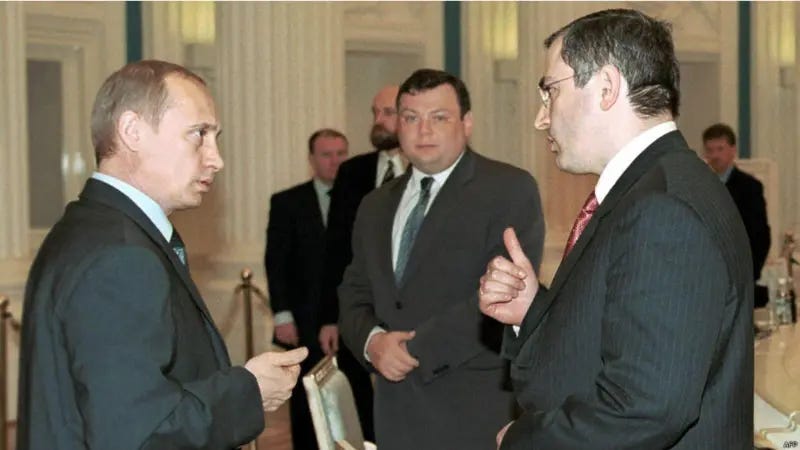
You can see how this rule works, on example of Putin & Khodorkovsky. They both were the vassals and picks of Yeltsin. Obviously, Khodorkovsky is not an entrepreneur and never had been. He is a personal vassal of the Tsar, who was given a fair share of property, as a personal feud. Now the problem is. With Yeltsin, he well understood that Yeltsin is the Tsar and he, Khodorkovsky is a slave, whose place is under the boot. He knew that, with Yeltsin.
But when the new boss came, he started forgetting that. He falsely assumed that the change of leadership means personal liberation, for him. To Yeltsin, he owed everything, to Putin he owed nothing. Putin was just another serf of Yeltsin, like him. With the new boss, he started talking on equal terms, from the position of parity. That was, of course, not tolerated.
By this point, I have given a sufficient explanation for why the old boss’ vassals, so often appear to be problematic from the new boss’ perspective. And why the new boss feels the need to purge the vassals of the old, despite himself being his vassal, once. There is a strong rationale, behind getting rid of them all, and, being perfectly bad, Stalin brought it to its logical end.
Except - strangely enough - with Kalinin.
In the entire Stalin’s Politburo, he and Stalin were too only people, picked and promoted by Lenin. Of all the Soviet big bosses, he was the only one who did not owe everything and more to Stalin. Strangely enough, Stalin did not kill him, and even kept him in the government, till the very end.
Third. There was something in common between Stalin & Kalinin. I mean, the reason they had been elevated into the leadership in the first place. They were both DEI picks. Stalin was picked because he was Georgian, and Georgia had very few Bolsheviks back then. Kalinin was picked because he was Russian.
That’s how Lenin explained his promotion. We are the party of workers and peasants, aren’t we? And that guy, perfectly symbolises the union between the two. He is Russian, actual Russian peasant from Tver (!), we must absolutely promote him into the government. So, yes, whatever their personal or business qualities could be, the initial reason for their advancement, was pure identity politics.
Through Stalin’s years, position of Kalinin in the Soviet government was quite peculiar. Remember, he was only other Lenin’s pick, surrounded by Stalin’s vassals from all the sides. And his position was different, different from them all.
You know in which respect he was different from all the other Soviet big bosses? He never signed any shooting lists.
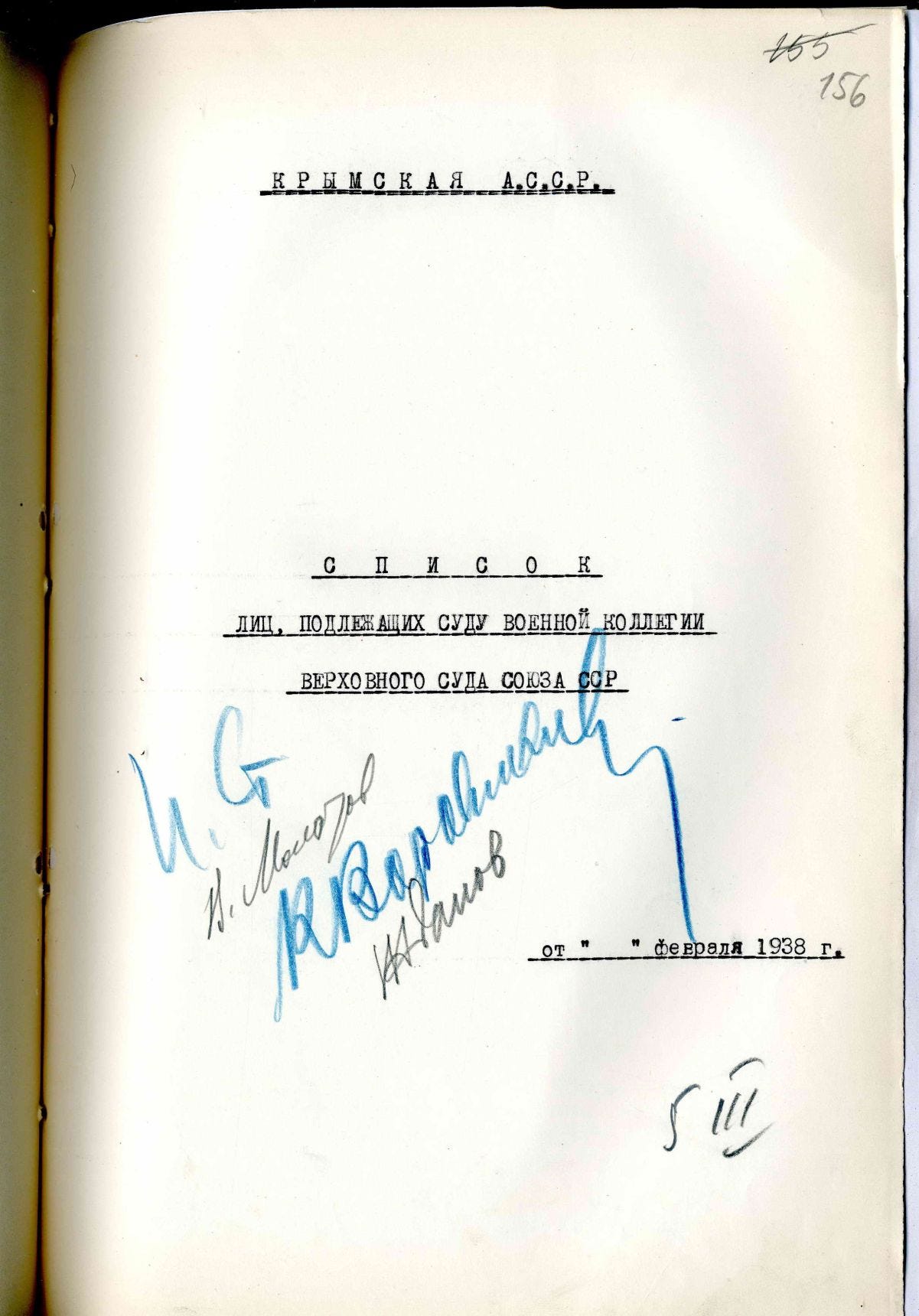
During the Great Purge, Politburo members were personally signing the lists of people to be executed. Most of all, were signed by Molotov, then Stalin, then everyone else. Some signed more of them, some signed fewer, but everyone had to participate in purges, and everyone’s hands were in blood.
Except Kalinin. He had been the only person in government to never have signed any, and who, seemingly, was (purposefully?) kept very far away from the repressions and all the repressive apparatus.
Again, he was a kind deity, responsible for mercy, and not for the punishment
Last. A bit of context, that may not fully explain the peculiar status of Kalinin in Soviet government, but make his miraculous survival through all Stalin’s purges more understandable. Explain why Stalin chose to spare this particular vassal of Lenin, and him alone. Spare him, although he did not owe everything to Stalin, and could, therefore, turn out to be uncontrollable.
Or could he?
Kalinin, of course, was an old Bolshevik, who participated in the pre-revolutionary struggle. And, as many of the old Bolsheviks he had been repeatedly arrested & interrogated. Spent some time in prisons, some time 1-2-1 with Tsar’s investigators. Now it looks like during at least one of these interrogations he talked, and disclosed some information he was not supposed to, not according to the party rules.
It looks like in the 1920s, the protocols of his interrogations - confirming the fact that he talked to the Tsar’s police - got into Stalin’s hands. And, once that happened, that made Kalinin fully controllable. Were Stalin to release them, that would result in an immediate destruction of Kalinin, in every respect. He would not be executed back then, but his status, his reputation, and his position in the elites would vanish in no time. He would immediately turn into pariah, hated and despised by everyone.
And that - remember that all of that was happening in the period of vicious intra-party struggle for power - made Kalinin absolutely controllable by Stalin.
Whatever he thought, however he felt, he had to obey Stalin, and to side with him against everyone, because Kalinin was compromised, and - having the kompromat - Stalin firmly held him by the balls. Now, paradoxically enough, it is being compromised that may explain the survival of Kalinin, the only one of Lenin’s appointees. He knew he was guilty, he was terrified of punishment, and all of that made him absolutely obedient to the one who held a file with the kompromat.
There was just no point, in killing him
But there was a strong rationale, to keep him as the head of state, because the knowledge of own guilt made him perfectly controllable
And that brings us to our last point. Accountability. You know, every time, people start talking about the value of accountability, I think.
Accountability to whom exactly, you, brainless animal?
The feeling of guilt, the knowledge of guilt, the terror of shame & punishment, all of that serves as the best possible foundation of evil power, making people perfectly controllable by the one who can spare them, or throw them to the wolves, all by disclosing their hidden sins.
I have long had this thesis that the ideal of Communism was unachievable because the Bolshevik Revolution merely replaced one nepo Aristocracy with another. The second Aristocracy liked to appear dressed as a peasant or worker while it also liked the benefits of living as a Baron or Duke. It maintained the excuse of being the necessary intellectual vanguard, Lording it over others, to reach the goal of true equality.
I've been reading Kamilkazani's essays since 2022 to understand something of Russia's culture. I have formed the opinion that an ideal conceived by a German intellect in an English motherland was born in the most unfortunate circumstance. It may sound racist to say it, but the baby could only be ugly because it was so Russian. No, I don't think all Russians are ugly. I mean it as an analogy about the birth of Soviet Communism.
I'm a fan of the Oxford University Press series A Very Short Introduction. For £10 you can buy a pocket size book written by an expert in their field. They are addictive and a danger to my bank balance. I picked up their Very Short Introduction to the Tudors to read on a train journey. I read the chapter on Henry VII, who began his reign as a courageous Lancastrian King, somewhat idealistic while in his youth. He ended his reign as unpopular, deeply paranoid about Yorkist plots, oppressive, cruel and corrupt.
A day later I'm reading Kazani about a Russian House that courageously started with great ideals but became paranoid, oppressive, cruel and corrupt.
Such is life...
I can only imagine the scenes of degradation Mikhail Ivanovich must have endured at Koba's dacha. I had never considered this question before, but surely you are correct! (Edit: "Kalinin" to "Mikhail Ivanovich")